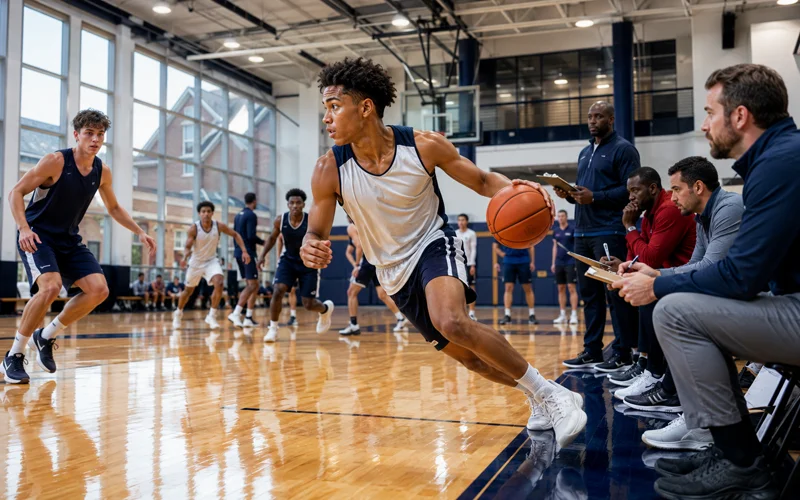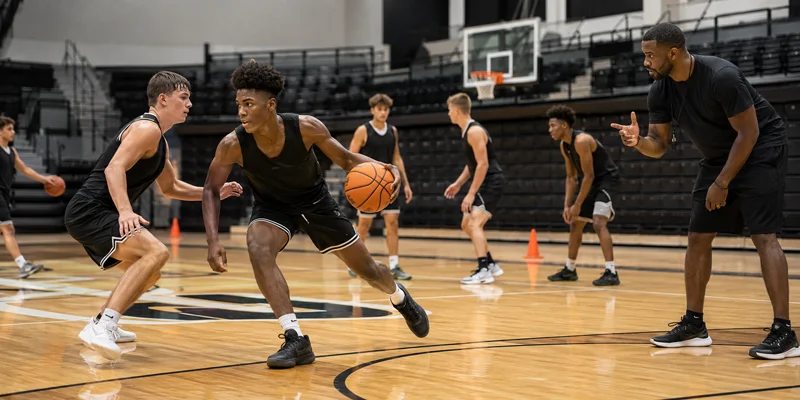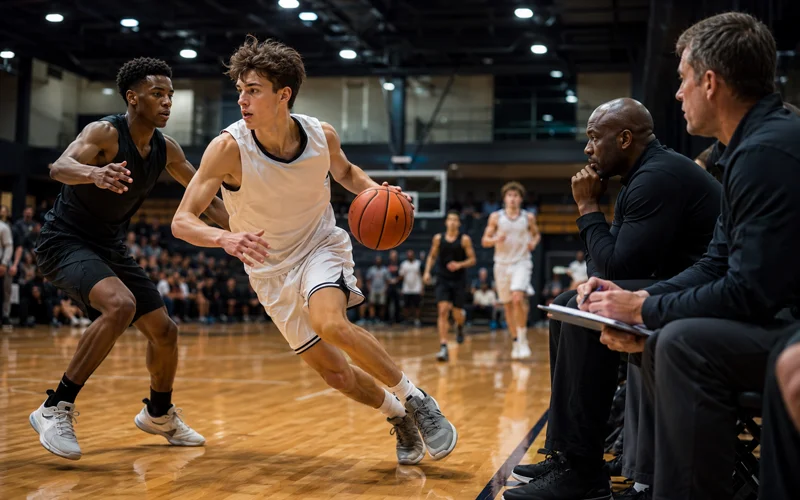
Every year, a small percentage of high school basketball players go on to play in college, and an even smaller share reach Division I. That’s not meant to discourage anyone; it’s meant to show that getting recruited rarely happens by accident. It happens through a fairly specific process, repeated consistently over a couple of years. Here’s how that process actually works.
Step 1: Understand NCAA Eligibility Early
First, know the academic baseline. Players hoping to compete at the Division I or II level need to meet the NCAA Eligibility Center’s core-course and GPA requirements, and that clock starts well before senior year. The NCAA Eligibility Center’s guidelines are worth reading directly rather than relying on secondhand summaries, since requirements are updated periodically. This is also where a school’s academic structure matters: an NCAA-certified academic program with real GPA monitoring removes a lot of the guesswork.
Step 2: Build a Real Highlight Film, and Keep It Updated
A highlight film is often the first thing a college coach sees before ever watching a player live. It should be current (ideally updated every season), honest about a player’s role, and focused on the skills relevant to the position and level a player is targeting, not just highlight-reel dunks and step-back threes.
Step 3: Get Seen Where Coaches Actually Look
College coaches do most of their in-person scouting during NCAA-designated evaluation periods, when they can watch players compete live at tournaments, showcases, and school games. Grassroots circuits like the Nike EYBL carry particular weight because they concentrate high-level competition, and college coaches, in one place.
This is one of the biggest reasons coaching connections matter: a coach who’s actively involved in those circuits, the way Bethel Academy’s staff is through Team Takeover on the EYBL, can put a player directly in front of the right audience rather than leaving exposure to chance.
Camps and combines matter too, both for skill development and additional exposure. Bethel Academy’s own basketball camp is one example of a lower-pressure setting to sharpen fundamentals outside of the season.
Step 4: Understand the Rules Before You Reach Out
NCAA recruiting rules restrict when and how coaches can contact players directly, and those rules shift depending on whether it’s a contact period, evaluation period, quiet period, or dead period. Coaches can watch a player compete during an evaluation period, for example, but generally can’t have off-campus conversations with the player or family during that same window.
Knowing the difference helps set realistic expectations for when a coach might actually reach out. Our companion piece on how college coaches scout prep school players goes deeper into what coaches are watching for during these periods.
Step 5: Be Proactive About Reaching Out
Reaching out first isn’t just acceptable; it’s expected. A short, direct introduction email to a coach, including a highlight link, academic profile, upcoming schedule, and why the program is a genuine fit, puts a player on a coach’s radar well before an in-person evaluation. Research matters here: look at a program’s current roster, note which positions are due to graduate, and target schools where there’s a realistic opportunity.
Step 6: Let Your Character Do Some of the Recruiting for You
Coaches evaluate more than statistics. Body language after a mistake, how a player treats teammates and officials, and general coachability are all part of the read college coaches make in person, which is exactly why the leadership and character piece of a prep program isn’t just a soft add-on. It’s part of what gets scouted. Bethel Academy builds this directly into its program through its leadership development pillar.
Common Mistakes to Avoid
- Waiting until junior or senior year to start building a highlight film or academic record.
- Only targeting “dream schools” instead of a realistic mix of programs.
- Letting grades slip and jeopardizing NCAA eligibility.
- Assuming a great AAU season alone is enough without direct outreach to coaches.
Next Steps
If you’re evaluating whether a structured prep environment could accelerate this process for your athlete, learn more about Bethel Academy’s basketball prep program in Manassas, VA, or get in touch with any questions.
Frequently Asked Questions
When should a player start the recruiting process?
Ideally by the start of high school, or earlier if aiming for Division I. Academic eligibility tracking and skill development both benefit from an early start.
Does a player need a recruiting service to get noticed?
No. While recruiting platforms can help with exposure, consistent performance at scouted events, a strong highlight film, and direct coach outreach are the core of the process regardless of whether a paid service is involved.